Monday, 24 September 2018

Africa’s Environment Ministers call for action through innovative solutions

BY SAMUEL NABWIISO
Africa’s Ministers responsible for Environment   have announced commitment to promote and invest in innovative solutions while implementing concrete actions to overcome environmental challenges facing the continent.

In a ministerial declaration issued recently at the closing of the African Ministerial Conference on the Environment (AMCEN), African governments agreed to enhance innovative environmental solutions and capacity building of human capital to achieve sustainable development in Africa
.
Speaking on behalf of the President of Kenya H.E Uhuru Kenyatta, Mr. Keriako Tobiko, Kenya’s Cabinet Secretary for Environment said protecting environment  is vital actions since environment plays big role towards social transformation.
Some of the Minister  who attended the meeting

:” It is important to note that environment is the foundation and the basis of the social and economic development of our countries as continent let us struggle to ensure that nature is protected .” Tobiko said

This year’s AMCEN was held under the them Under “Turning environmental policies into action through innovative solutions”, the ministers the importance of the meeting was to mobilize political support and committed to integrate innovative solutions into their countries’ national development agendas.

According to the Moroccan Minister for Environment Dr. Nezha El Ouafi said African need invest more resources in developing innovations that can support environmental conservation.

“Africa needs to invest in innovative solutions to change its development pathway in a sustainable way. We need to deploy new and smart approaches to overcome the continent’s most pressing environmental challenges,” said Nezha El Ouafi Minister of Environment, Morocco and vice-president of AMCEN.

At the conference, ministers stressed the need to empower innovators, the private sector, micro-small and medium enterprises and civil society to use new approaches to address environmental challenges. They agreed to support Pan-African platforms on the environment to promote and share experiences and solutions across the continent.

“Public-private sector partnership will have to play a key role in embracing innovation and turning environmental policies into concrete actions to achieve the objectives of the AU Agenda 2063 and the 2030 Agenda for Sustainable Development,” Minister Ouafi added.

Committing to enhance their countries’ efforts to implement policies, legislation and programmes promoting innovative solutions, the ministers called on UN Environment Assembly and UN Environment programme to increase support to African countries as well as facilitating access to innovative partnerships.

“Africa stands on the right side of history to support the environment. We have the human resources, natural wealth, and leadership to innovate and transform our region,” said Joyce Msuya, Deputy Head of UN Environment.

Addressing the Conference, Dr. Tedros Adhanom Ghebreyesus, Director-General of the World Health Organization (WHO) said protecting the environment can save peoples live since environmental destruction leads to people’s death.

“Environment is central to human health; every year almost 12.6 million people die from hidden risks in the environment African governments should put human and environmental health at the center of policy making in all sectors.

Other key decisions made at the conference included Biological Diversity conservation:
African Governments recognized the urgent need to combat land degradation and restore ecosystems in Africa. A Pan-African action agenda is being prepared to respond to land and ecosystems degradation challenges.

The Ministers agreed to develop common positions on various priority issues and speak with one voice during the upcoming 2018 UN Biodiversity Conference which will be held in Egypt in November 2018. The priorities will inform the post-2020 biodiversity framework and the Convention on Biological Diversity.

On Climate Change, the Ministers stressed that the outcomes of COP24 should reflect the spirit of the Paris agreement. The outcomes should balance between the Agreements elements related to action, support and transparency. Adaptation and finance should be core elements for effective operationalization of the Agreement.

They emphasized the importance of enhancing accessibility, predictability and sustainability of means of implementation, in particular finance. They agreed to work constructively to deliver the mandate of the Paris Agreement Work Programme.

Health and Environment: Recognizing the nexus between environment and health, Ministers agreed to actively participate in the third Inter-Ministerial Conference on Health and Environment in Africa, Libreville, 9 to 12 October 2018. The theme is “Health and environment strategic alliance: a catalysis for action on the Sustainable Development Goals in Africa.”


Saturday, 15 September 2018

African Agric Ministers calls for more funding in the sector

BY SAMUEL NABWIISO
Several African agriculture ministers joined public and private sector representatives calling for more investment in agriculture at a Leadership4Agriculture event held at the African Green Revolution Forum (AGRF) in Kigali, Rwanda.

Organized by the African Development Bank, the Leadership4Agriculture session facilitated partnerships between policy makers, private investors, institutions and offered participants opportunity to learn more about the Leadership 4 Agriculture network’s agenda to drive action-oriented, growth enabling investments. Several ministers at the event criticized what they said was a culture of talk without action
.
“Too many of the same declarations are made but are never carried out at the African Union level,” said Côte d’Ivoire Minister of Agriculture, Mamadou Coulibaly.

The African Union’s Comprehensive African Agriculture Development Program in 2003 set a target for African governments to allocate ten percent of national budgets to agriculture. According to AGRF, only 13 African nations have reached or surpassed this goal.

Jennifer Blanke, African Development Bank Vice-President for Agriculture, Social and Human Development, and the Rockefeller Foundation’s Managing Director for Africa, Mamadou Biteye, earlier set the tone for the session. They charged their organizations to advance the Leadership4Agriculture mission..

President Kagame posing in Group photo with Delegates  during the conference 


“With [Bank] partners the Rockefeller Foundation, now we have funding for a Secretariat for Leadership4Agriculture, which will allow us to track progress,” said Blanke. “Let us all, together, make Africa shine,” she added.
 
Agriculture ministers from across the continent, including from Zambia, Nigeria, Uganda, Kenya, Gabon, Mozambique, South Sudan, Togo and Mauritius. Rwanda’s former Minister of Agriculture and Animal Resources, who now serve as President of the Alliance for a Green Revolution in Africa (AGRA), said ministers need to campaign harder for increased budget funding for smallholders.

“[Agriculture] is a government’s most important industry,” AGRA President Agnes Kalibata told the audience. “Nobody is going to give you money because you are Minister of Agriculture – there are 20 other ministries competing for money. It is [an agriculture minister’s] responsibility to make the case,” she said.

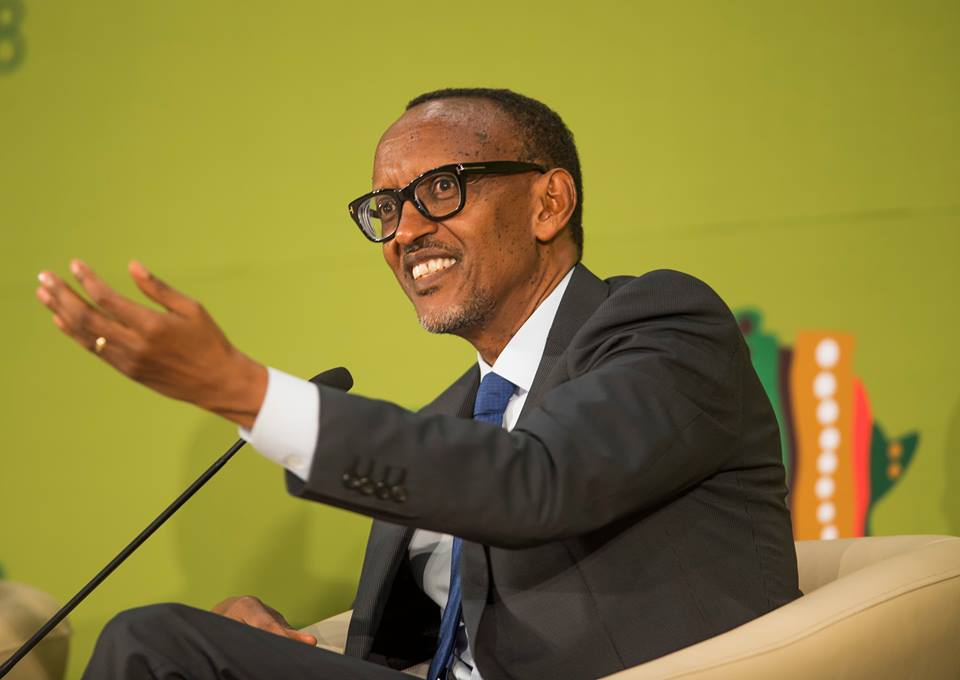
Speaking at the occasion Rwandese President  Paul Kagame  hailed African Green Revolution Forum for spearheading the development of Agribusiness in the Continent
Kagame  stressing  point 

.
AGRF research indicates farming remains a key source of income for 60 to 65 percent of the labor force in sub-Saharan Africa and will continue to be a major source of employment for a decade or more. Leadership4Agriculture session attendees said the mentality that agriculture is more of a traditional career for those who don’t have alternative r work options, has to change.

Edward Mabaya, Manager of the African Development Bank’s Agribusiness Development Division, said government leaders and farmers should replace the word “agriculture” with “agribusiness.”


Friday, 7 September 2018

NFA to plant 10 million trees

BY SAMUEL NABWIISO
National Forestry Authority plans to plant 10 million trees in a mover to restore Uganda’s forest cover which has been deeply reduced due to human activities across the country.

 According to Tom Okello  the executive Director  of NFA , Uganda’s forest cover  has been reducing at high rate this has exposed Uganda as Country to massive Environmental  Impacts such as climate change , landslides  and soil erosion which has had big impact on the country’s economy thus the need to restore the forest coverage in the country.

 “We are going to plant about 10 million trees starting on the 21stOf September across the country our attention is to restore the country’s forest cover  which has been highly degraded due to human activities such as the increasing demand for biomass fuels , demand for land for Agriculture activities due to the increasing population in the country “ Okello said.

Aisha NFA Pro and  Okoello during the press conference 


Uganda’s forest cover according to statistics from NFA stated diminishing from 1994 where the total coverage was at 24% but to date such coverage has been reduced to less than 10% currently. The major driver for the loss of the country’s forest cover is the high demand for trees to produce charcoal and fire woods which are the major source of energy in most urban towns in the country.

For the country to regain the lost glory of the forest cover, the country need to plant at least 136000 hectares annually and According to NFA, the agency is read to work with Individuals willing to engage in tree planting.

“We are willing to work with communities by providing free tree seedlings especially for the natural trees such as Mahogany Mvule  to those Individuals NFA has nursery tree  beds across the country which makes it very cheap to access the tree planting materials in the country let us work together for the good of our country” He said.

some of the tree seedlings to be distributed.


The tree planting Exercises is among the key Activities being organized by the tax Body URA as the agency plans to host the 2018 tax payers appreciation week which is expected to kick off on the 26thOf September to 28th at the Kololo Airstrip ground.

Addressing the media at the URA Head offices Okello said, NFA will be signing agreements with local Governments to ensure that they engage more local communities in tree planting.

“Government allocates some resources to NFA to implement the community Tree planting programs we shall be using part of the resources to support the local governments to implement the program on behalf of NFA” He said.  

Wednesday, 5 September 2018

UK partners with Kenyan scouts and UN environment to fight plastic

BY SAMUEL NABWIISO
UK Prime Minister Theresa May has  announced her government’s commitment with UN Environment to inspire young people to become leaders in the fight against single-use plastic.

May recently who was meeting over 150 scouts and Guides along side with the  Head of UN Environment, Erik Solheim, on the campus of the United Nations offices in Nairobi to announce the launch of a new Plastic Challenge Badge for Girl Guides and Scouts.


UK Prime Minister Theresa May  with Scouts  inKenya recently 


Plastic Challenge Badge for Girl Guides and Scouts, initiative will promote education and action through the type of hands-on environmental stewardship for which the Scouts and Guides are famous.
The Badge curriculum will first target schools and youth groups in Kenya, helping an estimated 50,000 young people to better understand the importance of reducing plastic consumption and kick-start behavior change.

In the UK, the government is providing $50,000 in initial funding for the project and will support an exchange programme to connect Scouts and Guides from the UK and Kenya with a focus on catalyzing a youth-led global effort to beat plastic pollution.

The UK Government will also fund the creation of a resource pack which will support UK Scouts to take greater action on plastic pollution.
In the months to come, UN Environment, the World Organization of the Scout Movement (WOSM) and the World Association of Girl Guides and Girl Scouts (WAGGGS) will continue to empower millions of young people on plastic pollution.
 World Scouting, with 50 million members across the world, and UN Environment in February renewed their global partnership for the environment.

Speaking to Scouts and Guides on hand to participate in a design challenge for the badge, UN Environment’s Executive Director summed up the stakes.

“The environment has already paid a heavy price for our addiction to single-use plastics. We simply can’t allow that cost to extend to the next generation,” said Solheim.

“That’s why this support from the UK government to create and launch a plastic pollution badge with the Guides and Scouts is such an inspiring step in the right direction. This global partnership allows us to not just fight plastic pollution on the beaches, but to invest in the young minds that will preserve the planet for future generations to come.”

Symbolic of to the UK’s global leadership in the fight against single-use plastic pollution, May paid the visit amid a packed diplomatic schedule which featured visits to South Africa, Nigeria and Kenya. She is the first Prime Minister since Margaret Thatcher to visit UN Environment headquarters in Nairobi.

Developed as part of the Food and Agriculture Organization’s Youth and United Nations Global Alliance, UN agencies, civil society and other organizations, 

Challenge Badges aim to raise young people’s awareness, educate and motivate them to change behavior and help them become an active agent of change in their local community. The series can be used by teachers in school classes as well as by youth leaders, especially those in Guide or Scout groups.


Wednesday, 22 August 2018

Makerere University gets more land to Enhance Mak’s Practical Forestry Training

BY ENU Reporter
Nyabyeya Forest College (NFC) in Masindi has handed over ten (10) hectares of land to Makerere University to enhance practical forestry training. The land provided will be used for establishment of a training plantation forest which will help in enhancing practical training and research.

This follows a Memorandum of Understanding signed between the College of Agricultural and Environmental Sciences (CAES) and Nyabyeya Forestry College on 3rd July 2018.The land was handed over by the Principal NFC Mr. Godfrey Akubonabona to the Vice Chancellor Prof. Barnabas Nawangwe on his maiden visit to NFC on 15th August 2018. The MoU between CAES and NFC was operationalised on the same day.
The Vice Chancellor-Prof. Barnabas Nawangwe (3rd L) exchanges the signed MoU with NFC Principal-Mr. Godfrey Akubonabona (4th L) as Mr. Henry Mwebe (L), Prof. Bernard Bashaasha (2nd L), Dr. Gorettie Nabanoga (2nd R), Prof. Mnason Tweheyo (3rd R) and other officials witness during the visit to NFC on 15th August 2018, Masindi Uganda
The hand over was witnessed by NFC staff including the Deputy Principal, Mr. Kisakye Richard, the Academic Registrar Mr.  Swaib Gwanyi, the Assistant Academic Registrar Mr.  Ambrose Ahimbisibwe and the Plantation Manager, Mr. Geofrey Sebahutu among others.

In his remarks, Prof. Nawangwe described Nyabyeya Forestry College as a centre of excellence in training foresters and appreciated the college for the excellent work it has been doing to train Makerere University students.

“I must commend those who have been resilient to keep this place in difficult times. I also commend the Principal Nyabyeya Forest College for the transformations during his two years in office,” Nawangwe commended.

The Vice Chancellor noted that Mak and NFC provide the biggest opportunity in the country as the only university and college training foresters.

The Professor decried the declining forest cover in the country  noting that unlike the past where permission would be sought  to even cut a tree one owned in his or her land, today cutting of trees is not regulated leading to the disappearance forestry cover.

He cited Kenya    as an example of an organized country where cutting  a tree for  charcoal is not allowed, Nawangwe  implored educational  institutions including Mak and NFC to take on the responsibility to ensure these standards come back.

“Government expects a lot from us the educational institutions. The most absurd thing is that someone from government should advise Makerere what to do. We can do a lot of research and that is extremely important.

The reason forests are disappearing is that we are producing very fast. Uganda is still among the fastest growing populations in Africa and therefore we must research into alternative ways of keeping our forests,” Nawangwe said.

The Vice Chancellor emphasized the importance of more practical training and learner-centered approach in promoting entrepreneurship and churning out graduates that can compete on the world market.

He observed that with two forests at their disposal, the two institutions can work together not only to do research and promote practical training but also generate resources to supplement government efforts.

The Principal CAES, Prof. Bernard Bashaasha said NFC and CAES have been enjoying an informal relationship for over 35years.  Bashaasha expressed happiness that they were at Nyabyeya to consummate the marriage.

“The collaboration has been going on not properly anchored and I am happy that this is happening.
The MoU has three critical elements; facilities, recess term and staff exchange but we are here to add another aspect of the relationship of having land,” Bashaasha reported.

Prof. Bashaasha was optimistic that with the acquisition and improvement of the existing facilities at NFC, forestry students would be able to spend more time on practical training.

“If we utilise the 10hectares of land well, we can train environmentalists and conservation managers and also make money. Environmental issues are important, climate change is here with us, when you see global patterns, that make training in environmental conservation very important,” the CAES Principal stated.


Friday, 10 August 2018

Enact special Law to protect Uganda’s Nature Environmentalists urges Govt

BY SAMUEL NABWIISO
Environmental Activists wants government to incorporate the rights of Nature in the new proposed National Environment Bill/ Act that is when the country’s nature/ environment will be protected against encroaches.

The activists urge that although Uganda has many Environmental Acts / regulations, the regulations have just fueled environmental destruction in the country instead of protecting the country’s nature.

 The call to come up with  Rights of Nature  was sounded by the coordinator Advocates For Natural Resources and Development (ANARDE) Frank  Tumusiime during meeting with  Members of Parliament from the Natural resources committee  in the parliament of Uganda.
Frank Tumusiime(Left)  Interacting with MPs after the meeting  


“The current  legal frame work has failed  to regulate  the environment  the various legislation has seen  the  worst  degradation  of the country’s Environment  because the laws  focus on licensing people to utilize nature but it does not allow nature to degenerate” He explained
.
ANARDE is non for profit Organization that advocates for advocacy for good environmental governance, corporate and government accountability among other duties.

He explained that  giving  nature  legal rights  means  the Law  can see nature  as a legal person  thus   creating  rights  that can  then  be enforced. He noted that some countries have enacted Rights of Nature and that has helped such countries to protect Nature from destruction.

Uganda is not the only country advocating for the Rights of Nature, Country’s such as Argentina, Belize Mexico have adopted the Rights of Nature in their Constitutions

What is Rights of Nature? Rights of Nature are the holistic recognition that all life, all ecosystems on our planet are deeply intertwined. Rather than treating nature as property under the law, rights of nature acknowledges that nature in all its life forms has the right to exist, persist, maintain and regenerate its vital cycles.

The justification  for  Rights  of Nature  in the National  Environment  Act is based on the current development which has seen the country’s nature being destroyed at high rate  and this has  caused many  social and economic  challenges to Uganda  as  a country.
 .
 According to researches Uganda, s forest cover shrunk from 4.9 million hectares (24% total land area) in1990 t0 1.8 million hectares (9% of total land area) in2015 and by 2055 Uganda will have no forest left.

Uganda has many environmental legal Instruments such as the   National Environment Act 1995, National Forestry and Tree Planting Act, 2003, among other regulations the Importance of such Acts is to ensure that the Country s Environment is not degraded by human Activities but on the surprise side of it the Country’s Nature are getting degraded at high rate.

Apart from depletion the country, forest cover, the country’s water bodies have been contaminated especially Lake Victoria its contamination has an Impact to the country’s Economy because it affects the Aquatic lives (Fish) and other animals that depends on water for survival including human being’s.

“It’s right time  to recognize  Right of Nature  because the country has stated experiencing  the Impacts  for Injuring nature which is manifesting its self-inform of floods extreme  heat being experienced in most parts of the country  and other associated calamites  are the reason  for the rights of Nature  to be included to the National  Environmental  Act “He said.

Commenting on the demand from Environmental Activists, the Vice chairperson of the Natural resources committee Lawrence Songa, said the country need to strengthen the Environmental related Acts, in place that is how the country’s nature will be protected.

“We should stop treating nature as property  as  Members  of Parliament on the committee we shall look into the demand from the Environmentalist s and see if it can be incorporated in the Environmental Bill which is in the house if their demand meets the desire from the house then we shall incorporate it into the Bill” He said.

MP Songa stressing point during the meeting 


Tororo Municipality Member of Parliament who is also member of the committee Hon Yeri Ofwono Apollo  advised the Environmentalists  to work with Government agencies to ensure that the existing Laws are implemented by government.
“Yes our Nature is being destroyed but who is to blame Uganda should borrow leaf from Kenya where communities and regional Governments comes up with Bylaws to protect Environment” he said.


Wednesday, 1 August 2018

UNBS Mandatory Certification Will Improve Competitiveness Of Local Products and save Environment

BY Godwin Bonge Muhwezi 
The Uganda National Bureau of Standards (UNBS) began implementing mandatory certification for all products covered by compulsory standards on July 1.
UNBS opted for mandatory certification in the new regulation as part of its continued efforts to safeguard public health, safety, and the environment from products that do not meet the standards.
Products covered by compulsory standards are those that are likely to compromise the health and safety of consumers and also have a negative impact on the environment.

Godwin Bonge 

Under the new regulation: “Use Distinctive Mark Regulations, 2018”, all products that are covered by compulsory standards must be certified with the UNBS Distinctive Mark (Q-Mark) before they are allowed on the market.
Such products include foods, drinks, electronics, cosmetics, steel products and cement, confectioneries (bread and biscuits), apiary and mattresses, among others.
Previously, certification of products was done on voluntary basis however with the coming into force of the new regulations, all affected products are expected to comply.
To-date UNBS has developed over 3,000 standards of which about 1,300 are compulsory standards covered by the new regulation. The standards can be accessed on the UNBS webstore: https://webstore.unbs.go.ug.
To ensure compliance to the new regulations, UNBS has embarked on a mass sensitization campaign to register all Micro and Medium Scale Enterprises (MSMEs) involved in production of products covered by compulsory standards.
Companies already on the UNBS certification scheme will be automatically registered.
The sensitization campaign is being carried out in partnership with Uganda Manufacturers Association (UMA), Uganda Small Scale Industries Association (USSIA) and other sector specific associations such as The Uganda National Apiculture Development Organization (TUNADO), among others.
It is expected that by December 2018 all affected companies will have complied with the new regulation.
To be certified, a product will have to undergo conformity assessments that include product testing, and auditing production systems to ensure that they meet standards for good hygienic and manufacturing practices.
All complying products will be issued with UNBS Distinctive Mark (Q-Mark).
Once the products have been certified, they will be kept in a database of certified products with continuous monitoring and periodic audits to ensure that the products still meet the standards.
This is done through routine inspections where UNBS inspectors pick routine samples from the market and voluntary submission of samples from manufacturers to UNBS for further analysis.
So why is product certification so important? The Distinctive mark is an assurance to the consumer that the product meets quality and safety standards and therefore safe for consumption or its use.
It gives consumers confidence that product will perform according to its desired qualities and therefore value for money. It can be used to make purchase decisions including government procurement.
Manufacturers and producers can use the UNBS Distinctive Mark to demonstrate to consumers that their products meet requirements for specific product standard.
Besides fulfilling regulatory requirements, it makes products widely acceptable in the market thus giving such products competitive advantage.
Certified products can easily access regional and international markets as a result of harmonized standards and mutual recognition of distinctive marks issued by respective national standards agencies, thereby boosting Uganda’s export earnings and contributing positively to its balance of payment.
The main advantage of mutual recognition of distinctive marks is that exporters do not have to undergo multiple testing and certification of products thus reducing the cost doing business and eliminating trade barriers.
For instance, products with UNBS Distinctive Mark can access international markets within EAC. With the signing of the Continental Free Trade Area (CFTA), such products should be able to also access all market in Africa under the FTA.
A recent study by the East African Business Council (EABC) revealed that intra-regional trade increased by 18% from $291.2m to $343 between 2010 and 2016 as a result of harmonizing standards in the East African Community (EAC).
Godwin Bonge Muhwezi is the Head of Public Relations at Uganda National Bureau of Standards (UNBS).